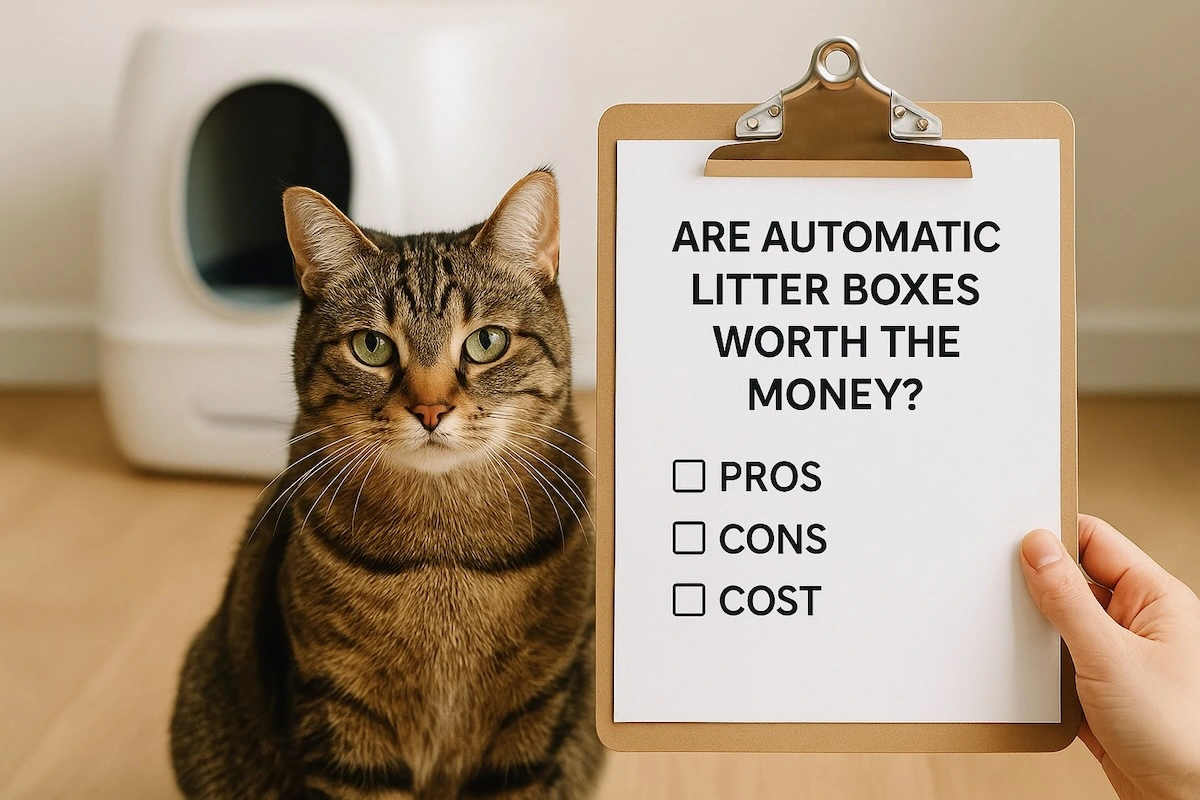
Automatic litter boxes promise a cleaner home, less scooping, less odor, and fewer litter box chores — but with price tags from £200 to £700+, many cat owners wonder:
“Is it really worth paying that much just so I don’t have to scoop?”
The honest answer is: yes for some people, no for others.
It depends on your home, your schedule, your cat, and the long-term cost of owning the machine — not just the upfront price.
This guide breaks down the real lifetime cost, the real benefits, and the real deal-breakers, so you can decide whether an automatic litter box is a smart investment for you — or just an expensive gadget.
What You’re Really Paying For
Automatic litter boxes don’t replace litter — they replace daily scooping and odor management.
What you’re buying is:
✅ Less scooping
✅ Cleaner air inside the house
✅ Less tracking and mess
✅ Fewer “my cat didn’t get covered properly” moments
✅ Automated waste removal when you’re busy, sick, traveling, or working long hours
✅ A healthier litter environment (especially if pregnant, allergic, or immune-sensitive)
What you’re not buying is a “set it and forget it forever” robot.
You still have to empty the drawer and refill litter — just far less often.
Upfront Cost vs Long-Term Cost
Most people compare only the price of the machine — but the ongoing cost matters more, because automatic litter boxes vary wildly in:
- Litter usage per month
- Waste bag requirements
- Power consumption
- Filter replacements
- Branded / proprietary refill costs
- Warranty length
Let’s break it down:
📌 Upfront Cost (One-Time)
| Type of Box | Typical Price |
|---|---|
| Manual tray | £10–£30 |
| Semi-automatic (sifting) | £60–£120 |
| Entry-level automatic | £180–£250 |
| Mid-range automatic | £250–£400 |
| Premium / Wi-Fi models | £400–£700 |
📌 Ongoing Costs (Per Month, Realistic Avg)
| Cost Type | Low-Cost Models | High-End Models |
|---|---|---|
| Litter | £8–£15 | £10–£18 |
| Waste bags / liners | optional | £4–£10 |
| Odor filters | optional | £3–£6 |
| Proprietary supplies | none | £10–£30 |
| Electricity | pennies | pennies |
Total monthly cost range:
✅ £8–£15/month for universal litter + standard bin bags
❌ £25–£45/month for branded consumables
✅ 3-Year Cost Comparison
| Box Type | Upfront | 3-Year Supplies | Total Cost |
|---|---|---|---|
| Manual tray | £20 | £480 | £500 |
| Budget automatic (standard litter) | £220 | £540 | £760 |
| Premium automatic (branded refills) | £550 | £1,100 | £1,650 |
So yes — robots are more expensive long-term…
But cost isn’t the only factor. Time and convenience matter too.
How Much Time You Actually Save
| Setup | Scooping Frequency | Time Spent Per Week |
|---|---|---|
| Manual tray | 1–2x per day | 15–30 minutes |
| Automatic litter box | 1–2x per week | 3–5 minutes |
Who Benefits the Most from an Automatic Litter Box?
✅ People with 2+ cats (waste builds up fast)
✅ Small apartment homes where odor matters
✅ People pregnant or immunocompromised (reduced toxoplasmosis exposure)
✅ People allergic to dust or litter particles
✅ People who want less daily chore interruption
✅ Elderly or disabled owners who have trouble bending
✅ Owners often away for 1–3 days at a time
If scooping is easy for you, and odor is not a problem → manual tray may still be fine.
If scooping feels like a burden (physically, emotionally, or time-wise) → the upgrade pays for itself in quality of life.
Pros & Cons Summary
| ✅ Pros | ❌ Cons |
|---|---|
| No daily scooping | High upfront cost |
| Cleaner home + less odor | Some models need branded supplies |
| Better for busy / disabled owners | Requires electricity & floor space |
| Cats always have fresh litter | Some units are louder than expected |
| Great for multi-cat families | Sensors or motors can fail |
| Less litter waste in long run | Must be cleaned monthly |
Deal-Breakers (When It’s Not Worth It)
❌ You only have one cat and scooping once a day doesn’t bother you
❌ You want a zero-maintenance box → (robots still require cleaning)
❌ You refuse to pay for branded filters/bags/refills
❌ You don’t have usable floor space or a nearby outlet
❌ Your cat is extremely nervous around noise/motion
❌ You expect a cheap unit to work like a £600 Litter-Robot
When It Is Worth It (Based on Real Owner Feedback)
✔ “We stopped smelling litter box odor completely.”
✔ “We can go away for a weekend and not worry.”
✔ “I have 3 cats — this finally made litter manageable.”
✔ “My wife is pregnant and can’t scoop — this solved everything.”
✔ “I’m disabled and can’t bend to scoop — total lifesaver.”
✔ “It paid for itself in saved litter within a year.”
Final Verdict
✅ If you’re looking for convenience, odor control, and cleaner floors → worth it
❌ If you’re expecting zero maintenance or zero cost → not worth it
❌ If you’re buying a cheap model and expecting premium performance → very not worth it
The right model + right litter + right expectations = excellent investment.
Next Steps
If you’re ready to choose a model:
👉 Quietest Automatic Litter Boxes
👉 Our Top 3 Picks Compared Side-by-Side
If you’re still deciding:
👉 How to Choose the Right Automatic Litter Box
If you already bought one and want the best performing litter:
👉 Best Litter for Self-Cleaning Boxes
Affiliate Disclosure
This comparison contains affiliate links. If you buy through them, we may earn a commission at no extra cost to you. We only recommend products that offer real value to cat owners.
Our rankings are not influenced by commission rates. We recommend the best product for each use case based on 8 weeks of real-world testing with our own cats. Read our full Affiliate Disclosure.
James Carter — Editor
Auto Litter Box UK
🐾 Assisted by Milo & Bella
Auto Litter Box UK is an independent review site. We are not affiliated with Litter-Robot, Petkit, Neakasa, or any other manufacturer.